Annual report on Hepatitis C in Denmark 2024
Annual report on hepatitis C in Denmark 2024
Hepatitis C is caused by infection with the hepatitis C virus (HCV). HCV causes inflammation of the liver, which rarely manifests as an acute illness. Most people develop a chronic infection, which is usually diagnosed many years after infection. In 2024, the Department of Infectious Disease Epidemiology and Prevention received a total of 124 notifications of hepatitis C.
Acute hepatitis C
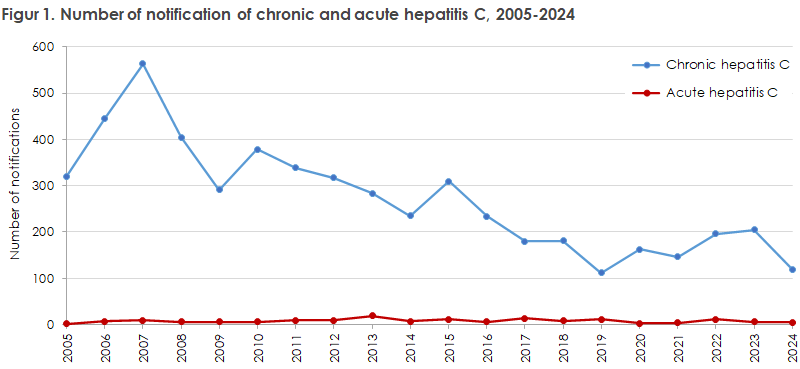
In 2024, five cases of acute hepatitis C were reported (three men and two women), figure 1. The median age was 48 years (range 31–54 years). Most were presumed to have been infected in Denmark, and the majority were presumed to have been infected through intravenous drug use.
Chronic hepatitis C
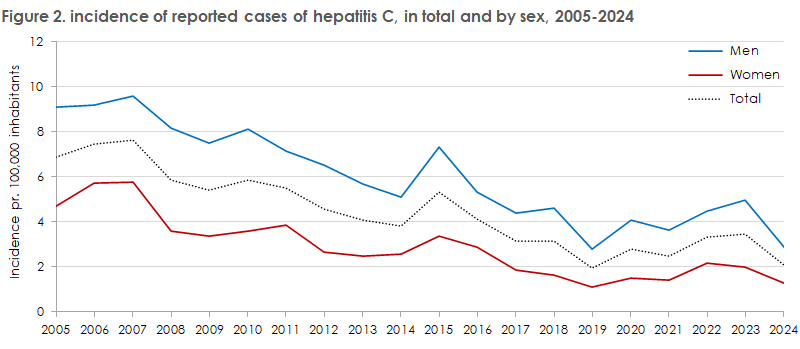
Chronic hepatitis C is defined as HCV RNA being detectable in the blood for more than 6 months. In 2024, 119 cases of chronic hepatitis C were reported, figure 1, of which 82 (69%) were men. The median age was 50 years (range 20–80 years) for women and 46 years for men (range 21–73 years). The incidence of reported cases of chronic hepatitis C has overall been declining from 2007 (seven cases per 100,000 inhabitants) to 2024 (two cases per 100,000 inhabitants), figure 2.
Mode of infection
Presumed country of infection
The presumed country of infection was stated for 108 (91%) of the reported cases of chronic hepatitis C in 2024. Of these, a total of 63% were reported as presumed infected in Denmark.

Mode of transmission
In 2024, the presumed mode of transmission was stated for 86 cases (72%) of the total 119 reported cases of chronic hepatitis C.
Intravenous drug use remains the most common route of infection, with 60 cases in 2024. Of these, 51 (85%) were infected in Denmark. In 2024, cases of sexually transmitted infection were also reported (<6%). Five people were reported as having nosocomial infection (infection acquired in a hospital setting) abroad.
Seven cases were reported as infected through tattooing, three of them in Denmark and the rest abroad. For the cases where infection occurred in Denmark, it should be noted that the tattooing was either performed many years ago or by a tattoo artist who was not registered or approved. For the remaining individuals, the mode of transmission was unknown.
This report is also covered in EPI-NYT 44/2025.