No 44 - 2025
Acute and chronic hepatitis B and C, 2024
Acute and chronic hepatitis B and C, 2024
Hepatitis B
For a detailed epidemiological overview, please refer to the annual report on acute and chronic hepatitis B 2024.
Acute hepatitis B
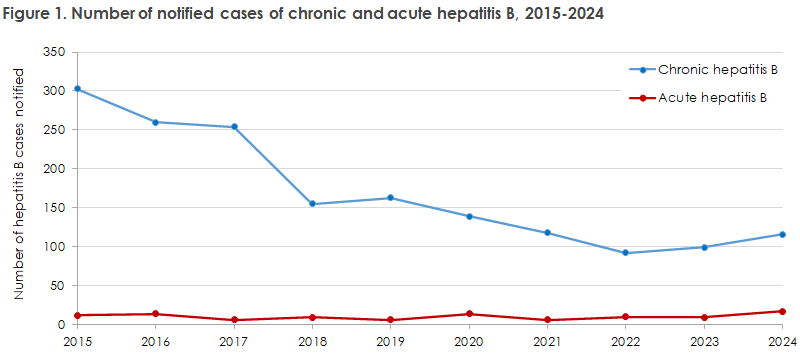
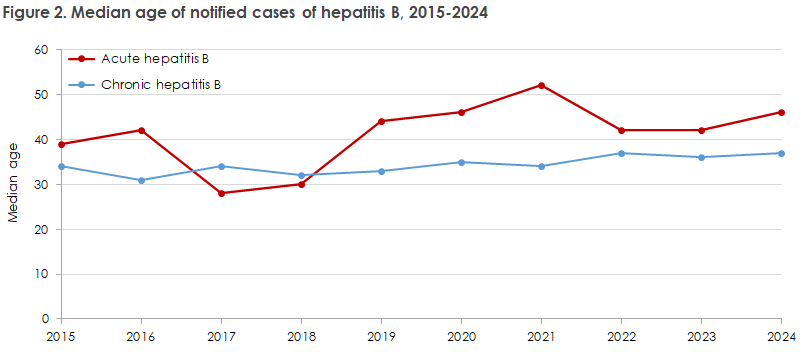
The Department of Infectious Disease Epidemiology and Prevention received 17 notifications of individuals with acute hepatitis B in 2024. By comparison, nine cases were reported in 2023. The most frequent mode of transmission was sexual contact (11 heterosexuals and two men who have sex with men). The majority of these were Danish-born and infected in Denmark. The median age for acute cases in 2024 was 46 years (range 19–80 years).
Chronic hepatitis B
With 116 reported cases of chronic hepatitis B in 2024, a slight increase was seen from 2023 to 2024, but overall, the trend has been decreasing over the past 10 years, figure 1.
The vast majority of reported cases of chronic hepatitis B in 2024 were of foreign origin and presumed infected before arrival in Denmark, most likely at birth. This trend remains unchanged compared to previous years.
In 2024, 54% of the reported cases of chronic hepatitis B were women. The median age for women was 36 years (range 22–78 years), and for men 38 years (range 22–69 years), figure 2.
The predominance of women reported with chronic hepatitis B is due to systematic screening of pregnant women, through which half of the women with chronic hepatitis B were identified. In 2024, no cases of perinatal infection were reported in Denmark. This underscores the importance of screening during pregnancy — both to detect infection in the mother and to ensure vaccination of the newborn to prevent transmission.
Hepatitis C
For a detailed epidemiological overview of the 2024 occurrence, please refer to the annual report on acute and chronic hepatitis C.
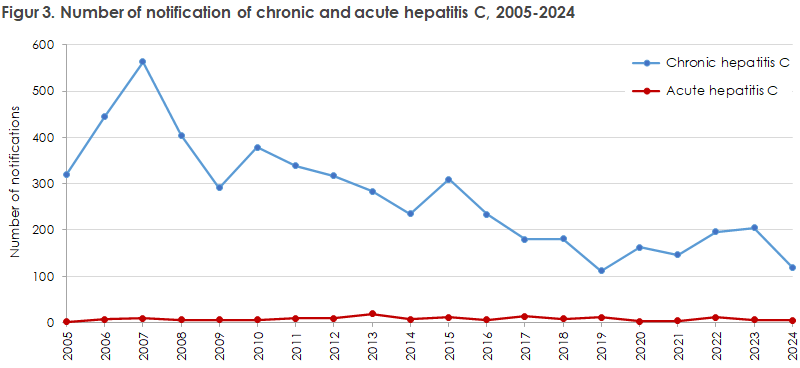
In 2024, the Department of Infectious Disease Epidemiology and Prevention received a total of 124 notifications of hepatitis C.
Acute hepatitis C
The number of reported cases of acute hepatitis C remains low. In 2024, five cases of acute hepatitis C were reported (three men and two women). In comparison, six cases of acute hepatitis C were reported in 2023. Most were presumed infected in Denmark, and the majority were presumed infected through intravenous drug use.
Chronic hepatitis C
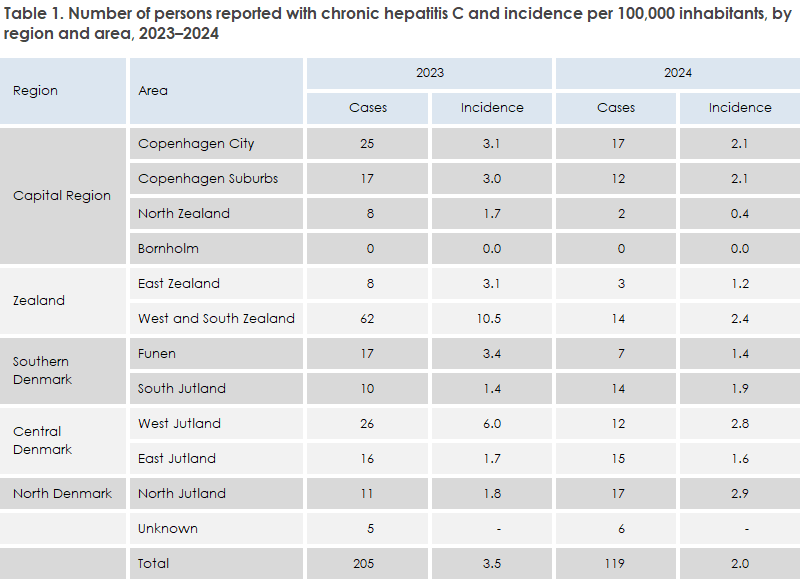
The number of reported cases of chronic hepatitis C decreased from 2023 to 2024 (205 cases in 2023 and 119 in 2024) and has overall been declining since 2007, figure 1.
Intravenous drug use continued to be the most common mode of transmission. Cases were also reported where transmission was considered to be sexual, nosocomial (hospital-acquired) abroad, or through tattooing performed either abroad or in Denmark by unregistered or unapproved tattooists.
Which age groups are infected with hepatitis C?
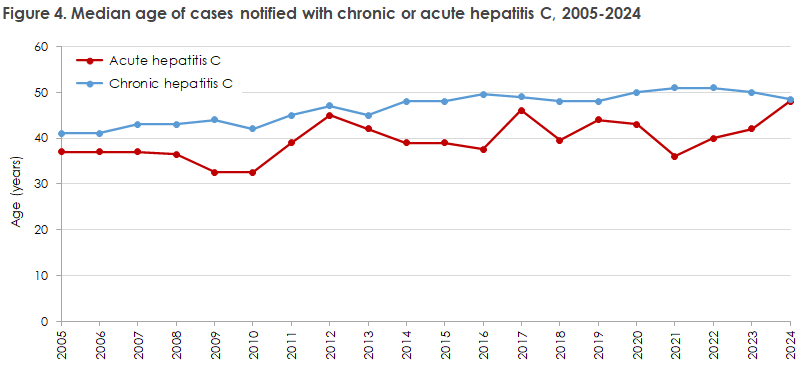
The median age for chronically infected individuals has steadily increased from the year 2000 until 2016. Since then, the median age has remained stable at around 50 years. For acutely infected individuals, the median age increased until 2012 and has since fluctuated slightly but remained generally stable around 40 years. However, the number of acute cases is small, which may explain the year-to-year fluctuations, figure 4.
Region and area
The incidence of reported cases of chronic hepatitis C in 2024 was highest in North Jutland (2.9 per 100,000 inhabitants).
Summary
The occurrence of acute hepatitis B has overall been stable since 2015, with some fluctuations — most recently in 2024, when 17 cases were reported. The occurrence of chronic hepatitis B has in the same period been steadily decreasing. Over the past ten years, the majority of individuals reported with chronic hepatitis B have been of non-Danish origin, while acute cases have primarily been among individuals of Danish origin.
For hepatitis C, the occurrence of acute hepatitis C has remained stable during the reporting period since 2005. The occurrence of chronic hepatitis C peaked in 2007 with 563 cases and has since steadily declined until 2019, after which smaller increases have been seen in certain years. These increases can be explained by heightened attention to screening and treatment in risk groups, as well as the presence of — and continued work within — several active projects in these areas. A large proportion of the reported cases of hepatitis C have been identified through active case-finding in risk groups. Active case-finding brings us closer to the goal of eliminating hepatitis C by 2030, which is part of the WHO’s global targets. However, there remains a need to ensure reporting of sporadically detected hepatitis C cases that are not identified through screening initiatives.
The largest risk group for hepatitis C continues to be individuals of Danish origin who have been infected through intravenous drug use. This has remained unchanged over the past decade.
Reporting of hepatitis B and C continues to rely on electronic notification of each individual case by treating physicians or other healthcare personnel. This may result in underreporting of such cases.
Statens Serum Institut has been working on establishing a laboratory-based surveillance system for hepatitis B and C. Once implemented, this will provide a more accurate monitoring of these diseases in Denmark.
(L.H. Holm, A. Koch, Department of Infectious Disease Epidemiology and Prevention)