Annual Report on Hepatitis B in Denmark, 2024
Annual Report on Hepatitis B in Denmark, 2024
In 2024, the Department of Infectious Disease Epidemiology and Prevention received a total of 133 notifications of hepatitis B.
Acute Hepatitis B
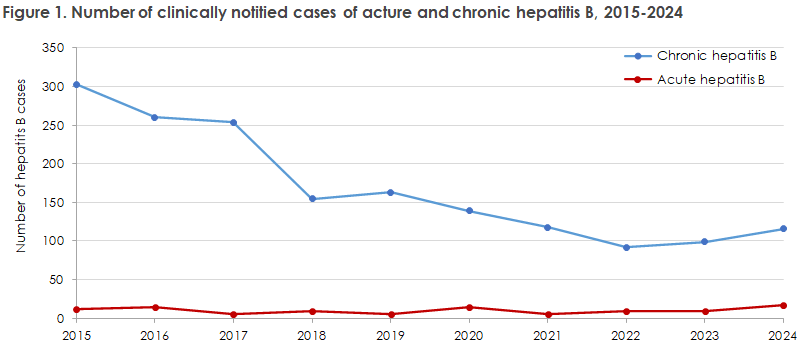
In 2024, 17 people were reported with acute hepatitis B (4 women and 13 men). The median age was 46 years (range 19–80 years). All 17 cases were born in Denmark, including 2 with ties to another country. 10 individuals were infected in Denmark, while the remaining were infected abroad. The most common mode of transmission was sexual contact: 11 cases among heterosexuals, 2 cases among men who have sex with men (MSM).
Chronic Hepatitis B
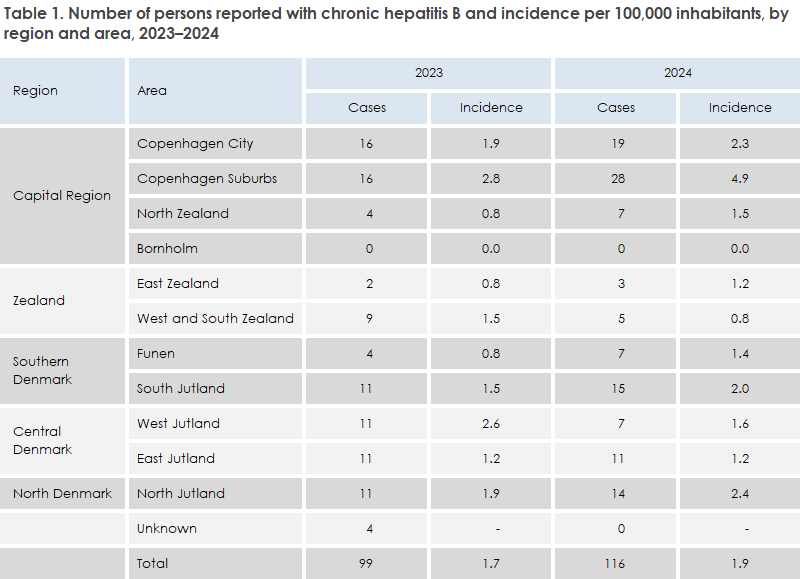
In 2024, 116 cases of chronic hepatitis B were reported, compared with 99 cases in 2023 (see Table 1). Median age was 37 years (range 22–78 years), for women it was 36 years (range 22–78 years) and for men it was 38 years (range 22–69 years). Women accounted for 54% of all chronic hepatitis B cases. It should be noted that the higher proportion of women reported with chronic hepatitis B is influenced by systematic screening of pregnant women.
Presumed source and country of infection
The vast majority (97%) of reported chronic hepatitis B cases were among individuals of foreign origin. The most common countries of origin were: Romania, China, Turkey, Vietnam, Syria, Thailand, and Afghanistan.
More than half (57%, 66 cases) of chronic hepatitis B cases were reported as infected at birth (perinatally). Of these, 3 were infected in Denmark before the introduction of universal screening of pregnant women in November 2005. The remaining 63 cases were born abroad, distributed on 25 different countries. The median age among those presumed infected at birth was 34 years (range 19–78 years).
In total, 48% of women (33 women) were identified through the universal screening of pregnant women. Only one woman was born in Denmark, the rest were born abroad. Most of these were assessed by the notifying physician to have been infected at birth.
One case was reported as nosocomial infection (hospital-acquired) abroad. No nosocomial infections occurred in Denmark.
Five cases were reported as sexually transmitted (both in Denmark and abroad).
No cases were associated with intravenous drug use.
Eight cases were reported as infected through other means, all infected abroad.
For the remaining 36 cases (31%), the mode of transmission was unknown.
This report is also covered in EPI-NYT 44/2025.