No 10 - 2026
Marine Bacteria in Denmark 2020–2025
Marine Bacteria in Denmark 2020–2025
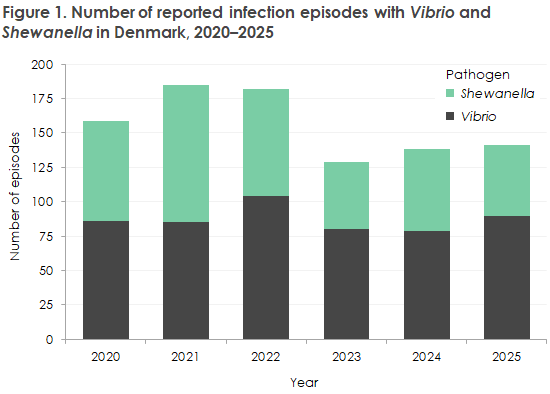
In the period 2020–2025, a total of 934 laboratory-confirmed infection episodes caused by Vibrio or Shewanella species were registered in Denmark. In 2025 alone, 141 episodes were recorded.
Most infections occurred during the summer months, with a clear seasonal variation and the highest number of cases from June to August. Men were more frequently affected than women, and older adults were the most affected age group.
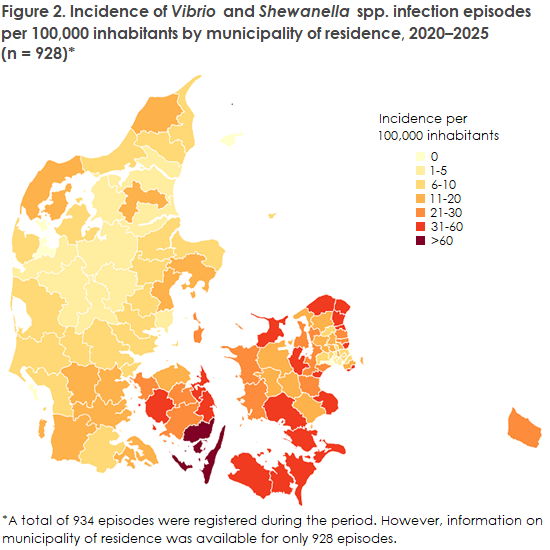
Infections were reported from across the country, but the highest incidence was observed in coastal municipalities and on the islands, particularly in parts of Funen and Zealand.
Vibrio and Shewanella
Vibrio and Shewanella are bacteria that occur naturally in seawater. The bacteria thrive in warm water with moderate salinity. In Denmark, human infections are primarily seen after contact with seawater, typically following sea bathing in summer. They most often present as ear or wound infections. Infections may also occur after consumption of raw or insufficiently heat-treated fish and shellfish, which is a common source of infection in other parts of the world.
Disease ranges from mild ear and wound infections to deep infections in pre-existing wounds. Invasive infections occur less frequently and are seen primarily in individuals with underlying disease or impaired immune response.
Epidemiological overview, 2020–2025
The annual number of cases varied only slightly during the period, ranging from 129 episodes in 2023 to 185 episodes in 2021, Figure 1. Vibrio species accounted for slightly more than half of the reported episodes throughout the period (n = 524).
Seasonal variation and geographical distribution
Both Vibrio and Shewanella infections occurred most frequently in summer, with increasing case numbers from June and the highest number of cases in August during the period 2020–2025. This reflects the association with warm seawater and increased sea bathing and coastal activities in the summer months.
An overview of patients’ distribution by municipality of residence showed higher incidence in coastal and island municipalities, while most inland municipalities had low or no recorded occurrence. A few municipalities with small populations had relatively high incidence rates, Figure 2. This reflects that marine bacteria grow best in brackish water, i.e. seawater with low salinity, which is found, among other places, in the Danish straits, the Sound, and the South Funen Archipelago.
Conclusion
Vibrio and Shewanella continue to constitute a seasonal infection risk in Denmark, primarily associated with contact with seawater. The risk of infection is markedly higher during the summer months, particularly in summers when bathing water persistently reaches high temperatures, and when exposed to seawater from inland waters, where salinity is lower than in the open sea.
Individuals with weakened immune systems — including older adults — and persons with open wounds should consider exercising caution when bathing or otherwise being exposed to seawater, especially in inland waters when water temperatures rise during summer. For physicians, increased awareness of marine bacterial infections is relevant during the summer period, particularly in older adults and individuals with chronic disease who present with ear or wound infections — or with more severe infections following seawater exposure.
Further information on marine bacteria is available in Marine Bacteria – Annual Report 2020–2025.
(K. Faksová, Data Science & AI in Health; A. Ronayne, Bacteria, Parasites and Fungi; S. Ethelberg, Department of Infectious Disease Epidemiology and Prevention)